

Alexei Makarkin, First Vice President of the Igor Bunin Centre for Political Technologies:
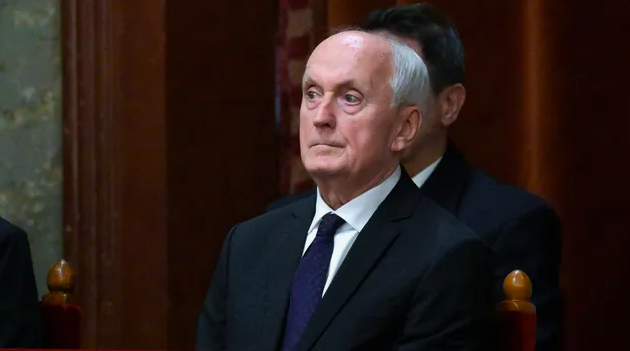
András Baka, nominated by Prime Minister Péter Magyar’s ruling Tisza Party, has become Hungary’s new president. In Hungary’s parliamentary republic, the presidency is a ceremonial office. The president is elected by members of parliament, and since Tisza holds a constitutional majority, Baka’s victory was assured. Fidesz, the party of former Prime Minister Viktor Orbán, boycotted the vote, arguing that Tisza had illegitimately forced the previous president, Tamás Sulyok—who had been elected under Orbán—to resign under the threat of impeachment.
Fidesz is now presenting itself as a defender of proper legal procedures. Yet Baka’s candidacy itself is evidence that Orbán also had a troubled record in this regard. Baka is one of Hungary’s best-known legal figures and has a far more substantial background than Sulyok, whose major legal career began only under Orbán. From 1991 to 2008, Baka served as Hungary’s judge at the European Court of Human Rights in Strasbourg.
In 2009, the Hungarian Parliament elected Baka president of the Hungarian Supreme Court for a six-year term. The following year, Fidesz won the election and Orbán became prime minister, launching a reorganisation of Hungary’s political system. Baka criticised Orbán’s plans to reform the judiciary, including the separation of the offices of Supreme Court president and head of the judicial administrative body. The prime minister then secured Baka’s early dismissal through a multi-step legal manoeuvre.
The Supreme Court was restored to its historic name, the Kúria—a name dating back to the eighteenth century, when Hungary was part of the Holy Roman Empire. A new president and vice-president of the Kúria were to be elected, with a requirement that candidates have five years of judicial experience in Hungary. As a former ECHR judge, Baka did not meet that requirement and lost his post. He nevertheless remained a member of the Kúria, heading one of its judicial chambers from 2012 to 2020.
Beyond their disagreement over judicial reform, Baka and Orbán were also at odds over another issue—historical, but highly symbolic. Orbán has always advocated the harshest possible assessment of the suppression of the 1956 uprising. In 2008, however, Baka, as Hungary’s judge at the ECHR, voted for the Strasbourg Court’s ruling in Korbély v. Hungary. The Court found that Hungary had violated the rights of a retired officer who had been convicted in 2001 for ordering his troops to open fire on insurgents and personally shooting one of them.
The Strasbourg judges concluded that, because the dead insurgent was armed with a pistol, he could not be regarded as a non-combatant. The fact that he had drawn the weapon could be interpreted in two ways: either as an intention to surrender it or to fire it. Based on their overall assessment of the circumstances, the ECHR found that the officer could have assumed the worst, which prompted the shooting.
Baka did not accept his dismissal and filed a claim with the ECHR, a court he knew well. In 2016, the Court ruled that the Hungarian authorities had violated his rights and ordered them to pay him around €100,000. The Court rejected the Hungarian government’s argument that Baka’s removal had merely been a side effect of wider reforms, finding instead that the legislation had been specifically directed against him. The ECHR also concluded that the Supreme Court president had been dismissed because of his public statements, and that this could discourage other judges from taking part in public debate. Hungary’s Orbán government disagreed with the ruling, and it was not implemented.
Hungary is therefore now witnessing a “boomerang effect”: Orbán secured Baka’s dismissal, and many years later Magyar forced Sulyok to resign and demonstratively promoted Baka to the highest state office. The new president has already spoken out against revanchism: “Criticism is not betrayal; limits on power are not an obstacle; political opponents are not enemies; and compromise is not a sign of weakness.” He also said: “We cannot build a new Hungary on the foundation of revenge.”
The remaining question is whether Hungary’s political class will be able to stop the cycle in which every change of power is followed by a new round of “purges.”