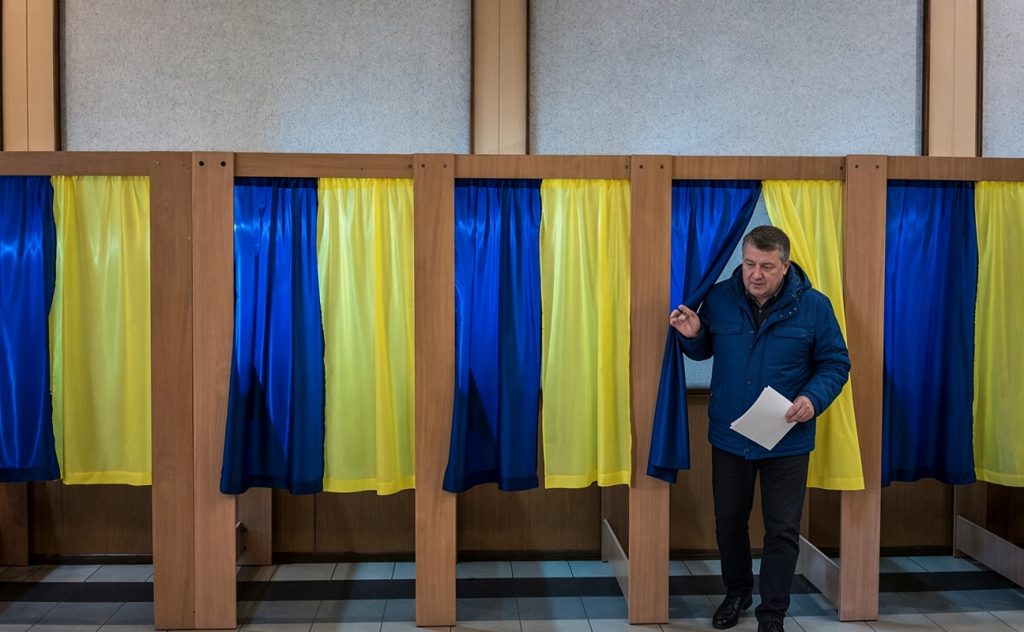



Oleshky on the left bank of the Dnieper in the Kherson region, where about twenty thousand people lived before the SMO, today remain almost without food, medicine, water and electricity. No one knows exactly how many people are left there: according to estimates by Ukrainian authorities, it is a matter of about two thousand residents, while the head of the Russian administration of the region, Vladimir Saldo, reports that the number of civilians remaining in the city is unknown.
“Hell on earth” — this is how local residents describe the situation in Oleshky in interviews with international media. According to them, people are forced to ration their last food supplies, gather edible herbs and constantly move between houses, fleeing from drones and shelling. The last store in Oleshky stopped working back in January 2026, and by the end of May food supplies had completely ceased.
Kremlin spokesman Dmitry Peskov on September 21 called the situation critical. He explained this by saying that Ukrainian shelling and drones make the delivery of food and medicine impossible, while Russian military are looking for a way out.
“The Kyiv regime is literally doing everything to hinder these supplies. Drones are constantly hovering in the air, killing people,” Peskov stated.
The arguments are backed up by specific episodes. In early September, Vladimir Saldo reported that a convoy of two minibuses and two trucks with ten tons of aid was attacked by Ukrainian drones at the entrance to the city, and published a video recording. Russian Foreign Ministry Ambassador-at-Large Rodion Miroshnik stated that Ukrainian drones struck the convoy, and volunteers had to leave on foot, abandoning the cargo. Later he added that the city is shelled daily, and attempts to restore substations and water facilities ended in new strikes. This is also confirmed by the testimonies of Russian military personnel with whom we managed to communicate personally.
Saldo explains the high intensity of attacks by the fact that Oleshky is located near Kherson, where many drone control points are concentrated. To this is added the argument that Moscow also cites for other sections of the front: humanitarian pauses and corridors can be used for military purposes.
Kyiv describes what is happening as a blockade. Ukrainian authorities claim that Russian forces not only do not allow aid through, but also seize what drones deliver. The latter assertion, of course, fits into the classic rhetoric of Kyiv propaganda, demonizing Russian military personnel.
Disinformation or a pretext to ask for new aid
At the time of publication, no official statements by Russian authorities or the local administration have been found in open sources that specifically address the situation in Oleshky and respond to accusations of blocking aid and seizing food. Nevertheless, there is information from Russian military personnel indicating that the cause of the humanitarian crisis was Ukraine’s strikes on logistics infrastructure, which led to the actual isolation of the civilian population of Oleshky. Due to the transport routes destroyed by the Kyiv side, neither the evacuation of civilians nor the delivery of humanitarian aid to them is possible.
For Kyiv, Oleshky has become a new pretext for creating fakes about the Russian army. And, it must be said, the invented story about fighters who take away Ukrainian humanitarian aid delivered to the city by drones is not even the most sophisticated form of fake. If we recall the stories of the failures of the Ukrainian disinformation machine, we should start with how in 2022 former Ukrainian ombudsman Lyudmila Denisova was fired for fakes about the “atrocities” of Russian military personnel.
“In Bucha, Russian military kept about 25 girls and women aged 14–24 in a basement and regularly raped them — nine of them became pregnant,” Denisova stated.
Later she justified herself by saying that she invented fakes about rape for the sake of her country. Denisova claimed that during a speech in the Italian parliament she noticed fatigue from the topic of Ukraine, so she took to composing horrific stories about rapes allegedly committed by Russian military. In this way she hoped to push the West toward adopting decisions in defense of Ukraine.
“Maybe I went too far. But I was trying to achieve the goal of convincing the world to provide weapons and exert pressure on Russia,” Denisova admitted.
Another piece of false information about the Russian army, which was actively circulated in Western and Ukrainian media since the spring of 2022, concerned the claim that Russia, due to sanctions and the backwardness of its defense industry, was forced to disassemble household appliances (washing machines, refrigerators, dishwashers) to extract microchips and use them in missiles (“Iskander,” “Kinzhal”) and other military equipment.
Stanislav Tverdokhleb, head of the industrial innovation park “Propusk,” commented on this as follows: “First, no amount of household appliances would be enough to saturate our instrument-making with chips and other elements. Second, technically it is difficult and pointless. What would be the amount of defects and costs? It’s simply nonsense.”
The missile that fell in the Polish village of Przewodów on November 15, 2022, was supposed to become an ideal basis for accusing the Russian side of a war crime, and Kyiv even hastened to put forward this accusation. However, the Polish prosecutor’s office concluded that it was a Ukrainian S-300 air defense missile that went out of control.
On September 6, 2023, after a strike on a market in Konstantinovka, Kyiv accused the Russian army of a war crime, stating that the strike was carried out by Russia with an S-300 missile. The New York Times in September 2023 wrote that the collected data (debris, satellite images, camera recordings) convincingly indicated a mistakenly fallen Ukrainian “Buk” air defense missile.
The humanitarian crisis in Oleshky has, of course, become for Kyiv a new convenient basis for putting forward unconfirmed accusations against the Russian army. And they cannot be confirmed, since there are simply physically no independent observers in the city. Every such attack against Russia is for Kyiv a pretext to ask for money to fight the “terrible monster.” In the end, this monster will turn out to be the requesting side with a wild imagination, an irrepressible craving for a rich life and outstanding talents in the sphere of corruption. Everything will be exactly like that, but for today we have the tragedy of civilians, whose fate has become a bargaining chip in the hands of tricksters from Bankova.