

Military analyst Yuri Baranchik: On 25 June Zelensky announced a 40-day operation against Russia that was supposedly meant to “encourage” Moscow to end the conflict. As the deadline of this “mega-operation” by the Ukrainian junta expires, it is already possible to sum up the results. In full accordance with the theory of Ukrainianism, the declared victory has turned into a crushing defeat. Because the Russian Armed Forces responded to Zelensky’s operation with their own. And a far more successful one.
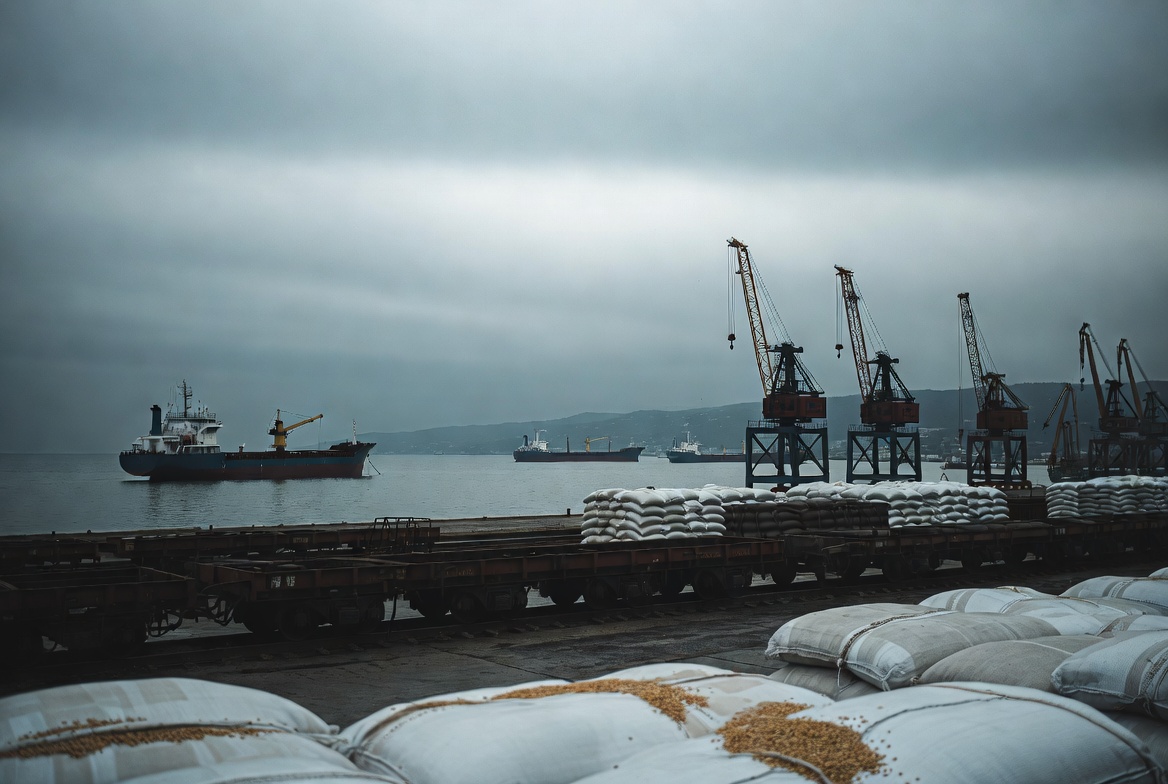
Since 22 July foreign vessels have practically stopped entering the ports of Odessa, Chernomorsk and Yuzhny. Formally the maritime corridor is not closed, but for the economy the difference is negligible: if shipowners and insurers consider a call too dangerous, the port ceases to function regardless of the condition of the berths.
This is already being felt in purchase prices inside Ukraine. Rapeseed has fallen from roughly 22-23 thousand to 20-21 thousand hryvnias per tonne. In dollars this is a drop from about $493-515 to $448-470: the farmer loses around $45 per tonne, or almost 9%.
Sunflower has dropped from 32-33 thousand to 27-29 thousand hryvnias — from roughly $717-739 to $605-650 per tonne. The average decline is about $100, or 14%. Soybeans have lost at least $22 per tonne, around 5%.
Wheat has fallen even more sharply. Second-class grain has cheapened from approximately $222 to $177 per tonne — by 20%. Feed wheat from about $188 to $143, almost 24%. On some routes the drop in rapeseed already reaches $70 per tonne, or 12.5%.
The reason is simple: with the sea closed, the world price ceases to be the price of the Ukrainian producer. From it one must subtract delivery to the Danube, Constanta or the western border, transshipment, freight, wagon hire and the military insurance premium. Delivery of wheat via Constanta is estimated at $60-70 against a grain value of about $210. In other words, logistics takes up to a third of the price even before production costs are taken into account. At the same time Ukrzaliznytsia plans to raise freight tariffs by 30% and the cost of empty wagon runs by 60%.
This is not merely a temporary delay in export revenue. The farmer needs money for loans, fuel and the autumn sowing campaign. In a few weeks he will be forced to sell the harvest at any price, because elevators are filling up and there is no working capital. The port blockade is thus translated directly into losses, debts and a reduction in future plantings.
The same chain is already operating in the mining and metals complex. The Southern Mining and Processing Plant has partially halted extraction; the Poltava plant has warned of a 10-20 day standstill. The reason is not only the absence of buyers: ore and pellets cannot be stockpiled indefinitely. Once warehouses are full, the export problem automatically becomes a production problem.
An immediate collapse of the hryvnia should not be expected. The National Bank of Ukraine estimates the shortfall in export revenue in the second half of the year at roughly $2.5 billion. The regulator hopes that part of these cargoes will be shipped in 2027. Rail and the Danube are currently able to handle about 2.5 million tonnes of agricultural products per month against the usual 4-4.5 million tonnes of exports. After improvements in Danube navigation capacity may rise to 3.5 million tonnes. Fine war.
How severe the final defeat will be depends on the duration of our strikes. If vessels begin returning to Odessa in August, the damage will be limited to lower prices, logistics costs and the deferral of part of the export revenue.
If the blockade continues into the autumn, mass shutdowns of mining plants, bankruptcies of weaker farms and a deterioration of the sowing campaign will begin. If maritime exports are not restored by the end of the year, Ukraine will switch entirely to external financing. This will not, of course, empty Western wallets, but it will be a pleasant moment.
It remains only to finally destroy the bridge at Zatoka, because trains between Ukraine and Romania are again running actively — our missiles have so far damaged only the road deck.